
 Finland
 Germany
 Denmark
 Sweden
 Italy
Italy Netherlands
 Norway


















When people talk about the challenges facing electric vehicles (EVs), the discussion usually centers on battery range, winter performance, or the environmental impact of mining raw materials. Yet another issue is quietly emerging—one that receives far less attention but could have significant consequences.
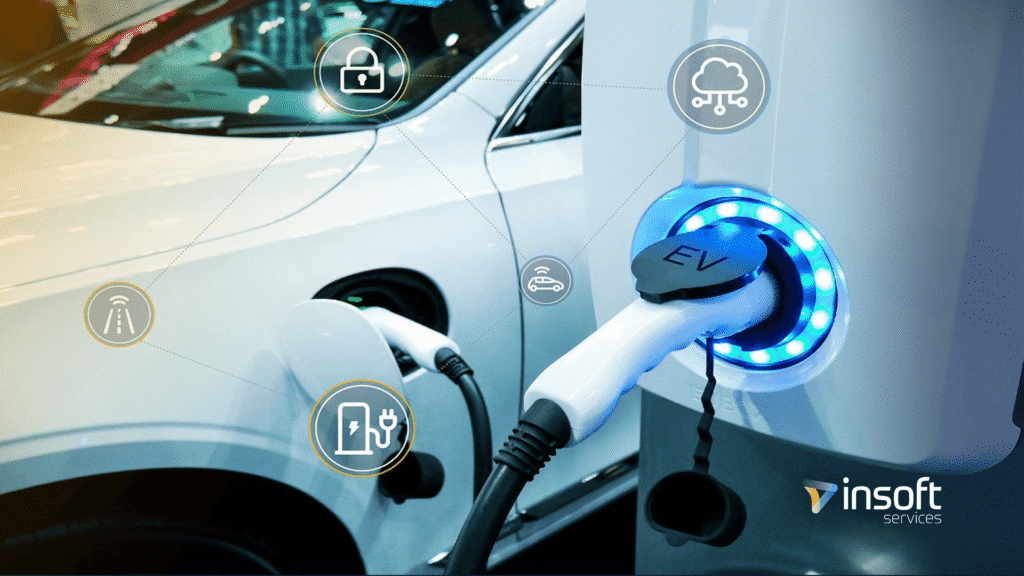
As cities, highway service areas, and commercial fleet operators rapidly deploy fast-charging stations, they are doing much more than replacing traditional fuel pumps. They are creating a vast network of internet-connected edge devices that interact with cloud platforms, communicate with vehicles, and connect directly to the high-voltage electrical infrastructure that powers modern communities.
For networking, cybersecurity, and IT/OT professionals, this is more than a utility modernization project. It represents an entirely new cyber risk landscape.
Understanding the Modern Smart Charging Station
To most drivers, charging an EV is as simple as plugging in a cable and waiting for the battery to recharge. Behind the scenes, however, every charging station functions as a compact edge computing platform designed to operate continuously in demanding outdoor environments.
The moment a charging cable is connected, a sophisticated digital exchange begins. Using the ISO 15118 standard, the vehicle and charging station authenticate one another by exchanging digital certificates and authorization data while sharing battery-related information. At the same time, the charging station communicates with a cloud-based charging management platform using the Open Charge Point Protocol (OCPP), while local controllers regulate power distribution to prevent electrical overloads and maintain grid stability.

This architecture creates three primary communication paths:
[ VEHICLE SYSTEMS ]
│
(ISO 15118)
│
▼
[ CHARGING STATION ]
│
(OCPP 2.0.1)
│
▼
[ CHARGE POINT OPERATOR CLOUD ]
│
(Utility Network)
▼
[ SUBSTATIONS & ENERGY STORAGE ]
Every component must communicate in near real time while safely managing high-voltage electricity. As a result, even minor connectivity issues or security weaknesses can have operational consequences.
Where IT Meets OT: Understanding the Risks
In traditional enterprise IT environments, cyberattacks often result in stolen credentials, compromised accounts, or data breaches. Within Operational Technology (OT), however, cyber incidents can also affect physical equipment and essential infrastructure. EV charging networks sit at the intersection of these two worlds.
Without appropriate security controls, several realistic attack scenarios could emerge.
1. Coordinated Attacks Against Charging Networks
If attackers successfully compromised the cloud management platform of a large charging network, they could potentially influence the behavior of thousands of charging stations simultaneously. Coordinated charging requests could create sudden spikes in electricity demand, placing additional stress on portions of the power grid and potentially contributing to localized service disruptions where safeguards are insufficient.
2. Pivoting Toward Connected Vehicles
The charging cable carries both electrical power and digital communications between the charging station and the vehicle. If a charging station were compromised, attackers could attempt to interfere with charging sessions, manipulate communications, or gain access to diagnostic information. Although modern vehicles incorporate multiple security controls, protecting this communication channel remains essential.
3. Supply Chain Compromise
The rapid global expansion of EV charging infrastructure relies on hardware and software supplied by numerous manufacturers. If malicious code or unauthorized firmware were introduced during manufacturing or software development, the compromise could remain undetected throughout the product lifecycle.
Because charging stations routinely receive over-the-air (OTA) updates, compromising a centralized update mechanism could potentially distribute malicious software across large charging networks before operators become aware of the attack.
Building Stronger Defenses
As EV charging infrastructure continues to expand, organizations increasingly need professionals who understand both enterprise networking and industrial cybersecurity. Several security practices are emerging as industry best practices.
1. Establishing a Hardware Root of Trust
Traditional firewalls remain important, but they cannot protect every aspect of distributed charging infrastructure.Modern EV charging stations are increasingly equipped with Hardware Security Modules (HSMs) that create a trusted hardware foundation. This allows devices to authenticate securely and verify the integrity of firmware and software before any code is allowed to run.
When combined with mutual Transport Layer Security (mTLS), these technologies help verify device identities and ensure that firmware, software updates, and connected devices have not been modified or tampered with.
2. AI-Powered Threat Detection at the Edge
Traditional antivirus software often struggles to detect previously unseen industrial threats. Instead, many operators are deploying lightweight AI and machine learning models directly on edge devices.
These systems continuously analyze electrical behavior and network activity, allowing them to detect anomalies quickly and isolate potentially compromised charging stations before threats spread throughout the wider infrastructure.
3. Network Segmentation and Zero Trust
Modern charging environments increasingly rely on network segmentation rather than flat network architectures. Driver Wi-Fi, payment processing, operational control systems, and management interfaces should operate on separate, isolated network segments.
Combined with industrial firewalls and Zero Trust principles, segmentation significantly reduces the ability of attackers to move laterally between systems if one component becomes compromised.
Core Security Roadmap
| Threat | Potential Risk | Recommended Mitigation |
| Grid Disruption | Coordinated charging activity causing localized grid instability | Localized safety controls that override abnormal cloud commands |
| Data Theft | Interception of payment credentials and user information | End-to-end encryption using ISO 15118-20 and modern cryptographic protocols |
| Physical Tampering | Unauthorized access to charging hardware through exposed maintenance ports | Secure Boot, encrypted firmware, tamper detection, and enclosure intrusion sensors |
The Bottom Line
The worldwide expansion of EV charging infrastructure represents one of the largest industrial networking initiatives in recent history. However, if organizations focus solely on deploying more charging stations without integrating cybersecurity into their design and operation, they risk creating an ecosystem that is increasingly vulnerable to sophisticated cyber threats.
The future of electric mobility will depend not only on battery technology and charging speeds but also on the resilience and security of the digital infrastructure supporting these systems. For networking, cybersecurity, and OT professionals, this represents one of the most significant opportunities of the coming decade to help build a safer, more secure, and more resilient transportation ecosystem.


No Comments