
 Finland
 Germany
 Denmark
 Sweden
 Italy
Italy Netherlands
 Norway
















The traditional approach to technical validation has shifted; a simple vendor badge is no longer enough to secure the converged, global infrastructures that define modern business. You’ve likely noticed the pressure to keep pace with evolving Zero Trust and SD-WAN technologies, yet the modular 2023/2024 updates to the NSE certification program have introduced a new layer of complexity for many professionals. It’s understandable to feel uncertain when choosing between self-study and the depth of instructor-led training, especially when your organization’s security posture depends on your expertise.
We’re here to provide the clarity you require. This guide outlines the exact pathways and strategic benefits of the restructured framework, helping you identify the precise level of competency needed to advance your career. You’ll discover how to leverage expert-led training from a Premier Authorised Training Center to achieve high-level proficiency and measurable ROI. From understanding role-based requirements to selecting the right training partner, we’ll ensure you’re equipped to lead your organization’s digital transformation with confidence.
Understanding the Fortinet NSE Certification Framework in 2026
The Network Security Expert (NSE) program has matured into a sophisticated, modular validation system designed to address the specific technical demands of a globalized digital economy. In 2026, the framework focuses on role-based proficiency rather than a linear progression, ensuring that professionals can demonstrate competence in targeted domains such as Zero Trust Access or Public Cloud Security. The core of this system remains the Fortinet Security Fabric, an integrated architectural approach that unifies security across the entire digital attack surface. By mastering this ecosystem, you gain the ability to manage complex threats through a single, automated platform, which is a critical requirement for modern enterprise resilience.
Global industry recognition of the NSE certification continues to grow as organizations struggle to bridge the cybersecurity skills gap. Please consider that this framework isn’t merely a collection of exams; it’s a strategic roadmap for professional excellence. It provides a structured method for individuals to validate their expertise while helping organizations identify talent capable of securing converged infrastructures. Whether you’re an entry-level technician or a seasoned architect, the program offers a clear trajectory for your professional development.
The Evolution of the NSE Program
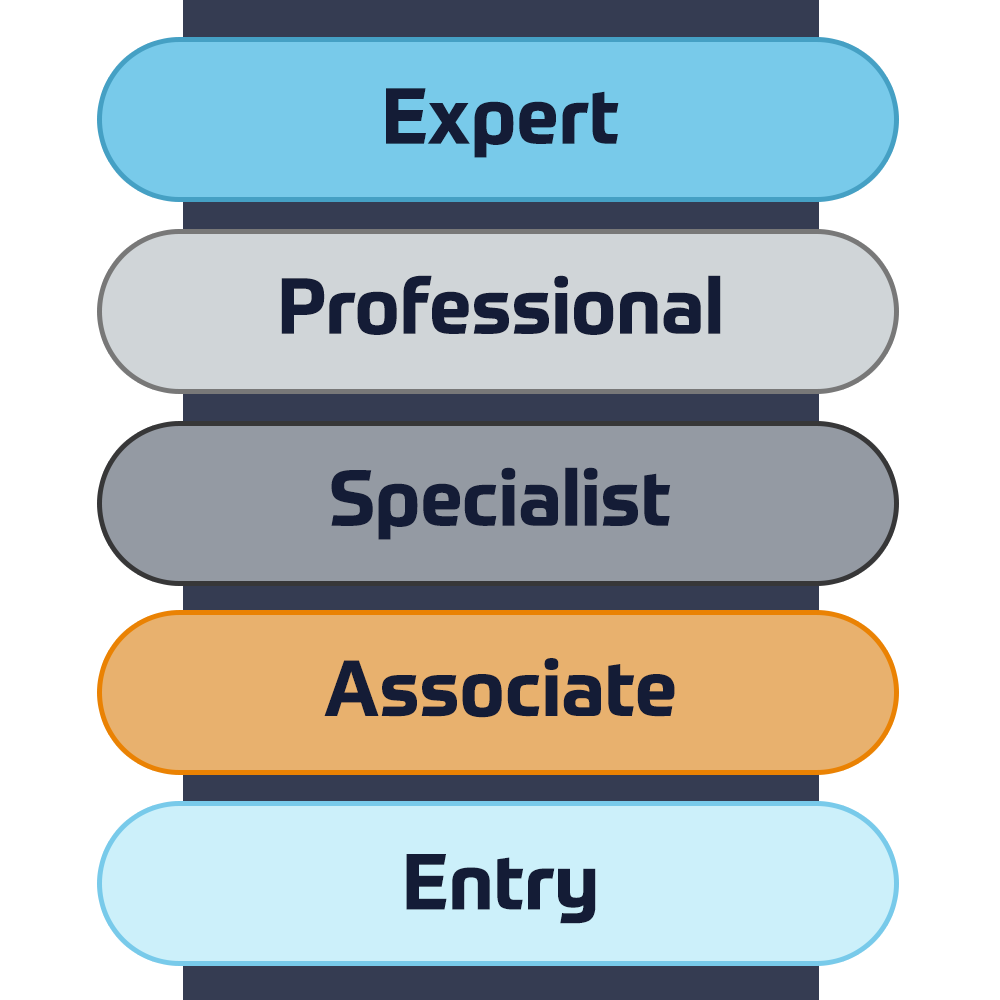
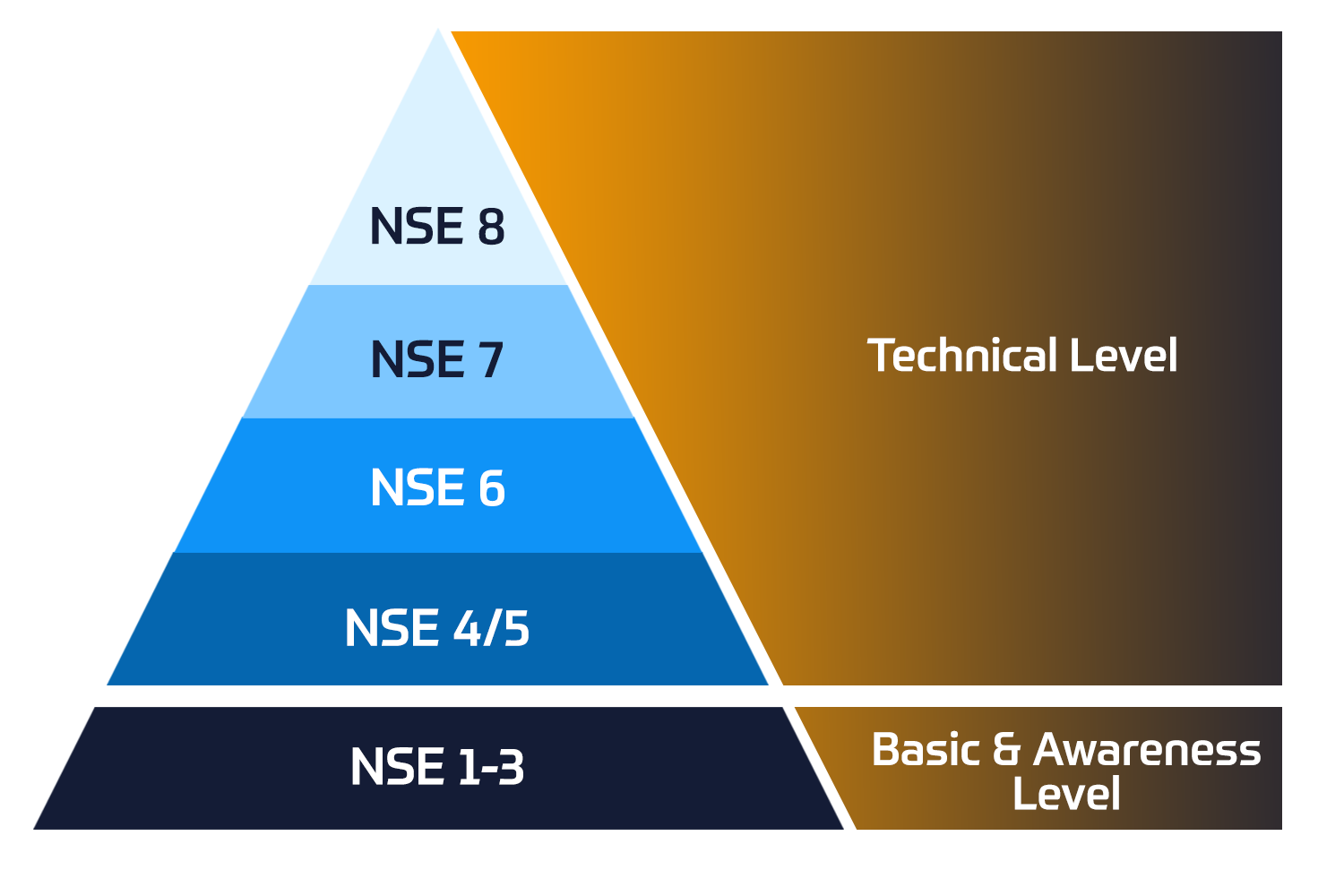
The transition from the legacy NSE 1 through 8 levels to the current modular architecture represents a strategic shift toward career-specific enablement. While the previous system followed a rigid numerical sequence, the new tiers, including Fundamentals, Associate, Professional, Analyst, Specialist, and Expert, allow you to tailor your learning path with precision. For instance, an engineer focusing on Security Operations can now pursue a direct NSE certification pathway that prioritizes technical agility in threat detection, omitting modules that don’t align with their specific daily responsibilities.
Why NSE Certification Matters for National Security Standards
Achieving these certifications is increasingly vital for meeting enterprise-grade security requirements and maintaining alignment with national regulatory standards. As organizations face stricter compliance mandates, the demand for certified experts who can implement robust, audited security measures has reached a peak. Professionals trained through an authorized partner gain the exact skills needed to manage these high-stakes environments. This ensures that your organization remains compliant with evolving data protection laws while maintaining the highest levels of operational integrity.
Detailed Breakdown of NSE Certification Levels and Pathways
The transition from the legacy numerical system to the current modular tiers ensures that your professional validation matches the specific demands of your role. This restructured NSE certification framework consists of four primary designations: Fortinet Certified (FC), Fortinet Certified Associate (FCA), Fortinet Certified Professional (FCP), and Fortinet Certified Expert (FCX). Each level requires a precise combination of core exams and elective specializations, allowing you to build a portfolio that reflects your actual technical responsibilities. For instance, the FCA tier establishes a foundational understanding of the cybersecurity threat landscape, while the FCX represents the highest echelon of architectural design and troubleshooting proficiency.
- Fortinet Certified (FC): Validates fundamental cybersecurity knowledge and basic security concepts.
- Fortinet Certified Associate (FCA): Focuses on the ability to operate and manage Fortinet security products.
- Fortinet Certified Professional (FCP): Demonstrates the capacity to install, configure, and monitor daily security operations.
- Fortinet Certified Expert (FCX): The elite level, formerly known as NSE 8, requiring rigorous written and practical lab evaluations.
Maintaining these credentials requires a commitment to continuous learning. Recertification cycles typically occur every two years, ensuring that your skills remain relevant as the Fortinet Security Fabric evolves. If you’re looking to map your existing skills to these new tiers, you might explore our comprehensive certification track for a clear visualization of your progression.
The Professional Tier: Mastery of FortiOS
The FCP level serves as the industry benchmark for security engineers tasked with protecting enterprise environments. To achieve this status, you must complete a core exam alongside a chosen elective, with the FortiOS Administrator course acting as the essential technical foundation. This training provides the granular knowledge required to manage FortiGate devices within a complex network infrastructure, covering everything from firewall policies to advanced routing and VPN configurations.
Specialist and Expert Pathways for Strategic Roles
Strategic growth often leads professionals toward Specialist tracks, which focus on high-demand technologies like SD-WAN, Zero Trust Access (ZTA), and Public Cloud Security. These pathways allow you to demonstrate niche expertise that is highly valued in digital transformation projects. For those aspiring to the FCX Expert level, the requirements involve a deep understanding of complex security architectures and the ability to troubleshoot multifaceted issues in real-time environments. It’s a prestigious achievement that signals your status as a global leader in cybersecurity strategy.
Strategic Advantages of NSE Certification for the Enterprise
Investing in an NSE certification program for your technical team yields measurable returns through enhanced operational efficiency and risk mitigation. Organizations with certified staff often experience faster identification of vulnerabilities and more streamlined deployment of security policies across the Fortinet Security Fabric. This technical precision reduces the likelihood of configuration errors, which remain a primary cause of enterprise breaches. By optimizing infrastructure management, your team can focus on proactive threat hunting rather than reactive troubleshooting, directly contributing to organizational agility. Precision in security is not a luxury; it’s a requirement.
Modern enterprises rarely rely on a single vendor, making the interplay between different ecosystems crucial for success. There is significant strategic value in aligning your Fortinet expertise with Cisco certifications to manage multi-vendor environments effectively. For example, an engineer who understands both Cisco’s networking protocols and Fortinet’s security layers can implement more robust Secure Access Service Edge (SASE) and Extended Detection and Response (XDR) solutions. This cross-platform proficiency ensures that security policies remain consistent as traffic moves from a Cisco-powered campus network to a Fortinet-secured cloud edge.
For organizations providing managed services or consultancy, maintaining a specific number of certified individuals is a prerequisite for achieving and retaining "Partner" status. This designation grants access to specialized support, early product insights, and enhanced commercial benefits. It signals to your clients that your team possesses the verified skills necessary to handle high-stakes digital transformation projects with absolute reliability.
Enhancing Security Operations (SecOps)
A Security Operations Center (SOC) staffed by certified professionals operates with significantly higher efficiency. NSE training provides the specific methodologies required for automated threat detection and rapid incident response within the integrated security ecosystem. While training empowers your internal team, you may also consider leveraging Fortinet Professional Services for initial architecture design to ensure your foundation is solid from day one. Please consider exploring our Fortinet authorized training options to begin this strategic transition.
NSE Certification as a Career Catalyst
Individual professionals often see immediate benefits from pursuing advanced validation. Industry reports suggest that specialists holding professional-level certifications can command higher salary ranges compared to their non-certified peers, reflecting the high demand for verified cybersecurity expertise. Beyond immediate financial gains, viewing an NSE certification as a long-term strategic asset positions you for leadership roles in network architecture and security management. It demonstrates a commitment to excellence that is recognized by global enterprises and government agencies alike. Your expertise is your most valuable asset.
Achieving Certification: Why Authorised Training is Essential
Securing your NSE certification requires a methodical approach that combines theoretical knowledge with rigorous practical application. We invite you to follow this structured four-step roadmap to ensure your preparation aligns with global standards. First, identify your specific career path and the corresponding modular requirements as outlined in the 2026 framework. Second, enrol in an authorised instructor-led course where you can gain hands-on lab experience under the guidance of seasoned experts. Third, utilize official study guides and practice assessments provided by a Premier ATC to validate your understanding. Finally, schedule and pass your proctored exam via a Pearson VUE testing center to formalize your credentials.
The Benefits of a Premier Authorised Training Center (ATC)
While self-study options exist, they often fail to provide the real-world context and technical depth found in a Premier ATC environment. Expert instructors offer invaluable insights that go beyond standard documentation, sharing practical scenarios encountered in complex enterprise deployments. At Insoft Services, we provide Fortinet authorised training that includes access to dedicated lab environments. These labs simulate intricate network topologies, allowing you to practice configurations without risking production stability. This immersive experience is often the deciding factor in successfully mastering the Fortinet Security Fabric.
Preparing for Success: Tips for the Exam Day
Success on exam day depends as much on strategy as it does on technical skill. Please ensure you manage your time effectively during the practical components of the assessment; don’t spend an’ excessive amount of time on a single configuration task if you can move forward. We recommend a final review of the following official resources before entering the proctored environment:
- Official Study Guides: Review the latest architectural updates and command-line interface (CLI) syntax.
- Lab Exercise Logs: Revisit your notes from the instructor-led sessions to recall specific troubleshooting steps.
- Pearson VUE Checklist: Confirm your identification requirements and testing center location at least 24 hours in advance.
By following this disciplined path, you’ll demonstrate the high-level proficiency required to lead in the cybersecurity sector. Your commitment to excellence starts with the right training partner.
Securing Your Future in the Converged Security Landscape
As cybersecurity architectures become more integrated, the necessity for verified, role-based expertise has never been more vital. We’ve explored how the modular 2026 framework allows you to tailor your professional development to match the precise requirements of modern security operations. By choosing a path that aligns with your specific career goals, you ensure that your skills remain relevant in an environment increasingly dominated by Zero Trust and SASE technologies. This strategic approach doesn’t just validate your knowledge; it empowers you to manage the complexities of global infrastructure with absolute confidence.
Achieving an NSE certification through a Premier Authorised Training Center provides you with the technical depth and real-world context necessary to lead complex digital transformations. Please consider our global delivery capabilities across the EMEA region, where our expert instructors bring years of implementation experience directly to your learning environment. We invite you to Explore Fortinet NSE Certification Tracks at Insoft Services to begin your journey toward technical mastery. The landscape of network security is evolving, and with the right strategic partner, you’re well-positioned to master it. We look forward to supporting your professional growth and organizational success.

No Comments