
 Finland
 Germany
 Denmark
 Sweden
 Italy
 Netherlands
 Norway

















Introduction
The rapid advancement of artificial intelligence is placing unprecedented demands on today’s digital infrastructure.
Not long ago, data centers—the massive facilities that power the internet—were relatively predictable. They housed rows of servers that consumed moderate amounts of electricity and relied primarily on large air-conditioning systems for cooling.
Artificial intelligence has changed that completely.
Running modern AI applications requires an enormous amount of computing power. The specialized server racks designed for AI workloads can consume up to ten times more electricity than traditional server racks, creating entirely new challenges for infrastructure engineers.
As a result, designing AI-ready data centers is no longer about optimizing individual components. Success depends on balancing four closely connected elements: computing hardware, cooling systems, networking infrastructure, and power delivery. If any one of these components becomes a bottleneck, the performance of the entire environment is affected.

1. AI Chips (GPUs)
At the heart of every AI application is the Graphics Processing Unit (GPU). Unlike the processor found in a typical laptop, which executes tasks sequentially, GPUs are designed to perform thousands of calculations simultaneously. This parallel processing capability makes them ideal for training and running AI models.
The trade-off is energy consumption.
High-performance AI GPUs require significantly more power than conventional processors. When dozens or even hundreds of these chips are installed within a single server rack, electricity demand increases dramatically, generating large amounts of heat in the process.
2. Advanced Cooling Systems
Higher computing performance inevitably produces greater amounts of heat. Traditional air cooling is often no longer sufficient for today’s AI infrastructure. Excessive heat can reduce system performance, shorten hardware lifespan, and potentially damage critical components.
To address this challenge, many modern data centers are adopting liquid cooling technologies.
Direct-to-chip cooling circulates chilled liquid through cooling plates attached directly to processors, efficiently removing heat where it is generated.
Some organizations are also implementing immersion cooling, where entire servers are submerged in specially engineered dielectric fluids that safely absorb and dissipate heat without conducting electricity.
In certain regions, the captured heat is even repurposed to supply district heating systems, helping warm nearby homes and commercial buildings while improving overall energy efficiency.
3. High-Speed Networking
Powerful processors alone cannot deliver AI performance. They must continuously exchange enormous volumes of data with thousands of other processors.
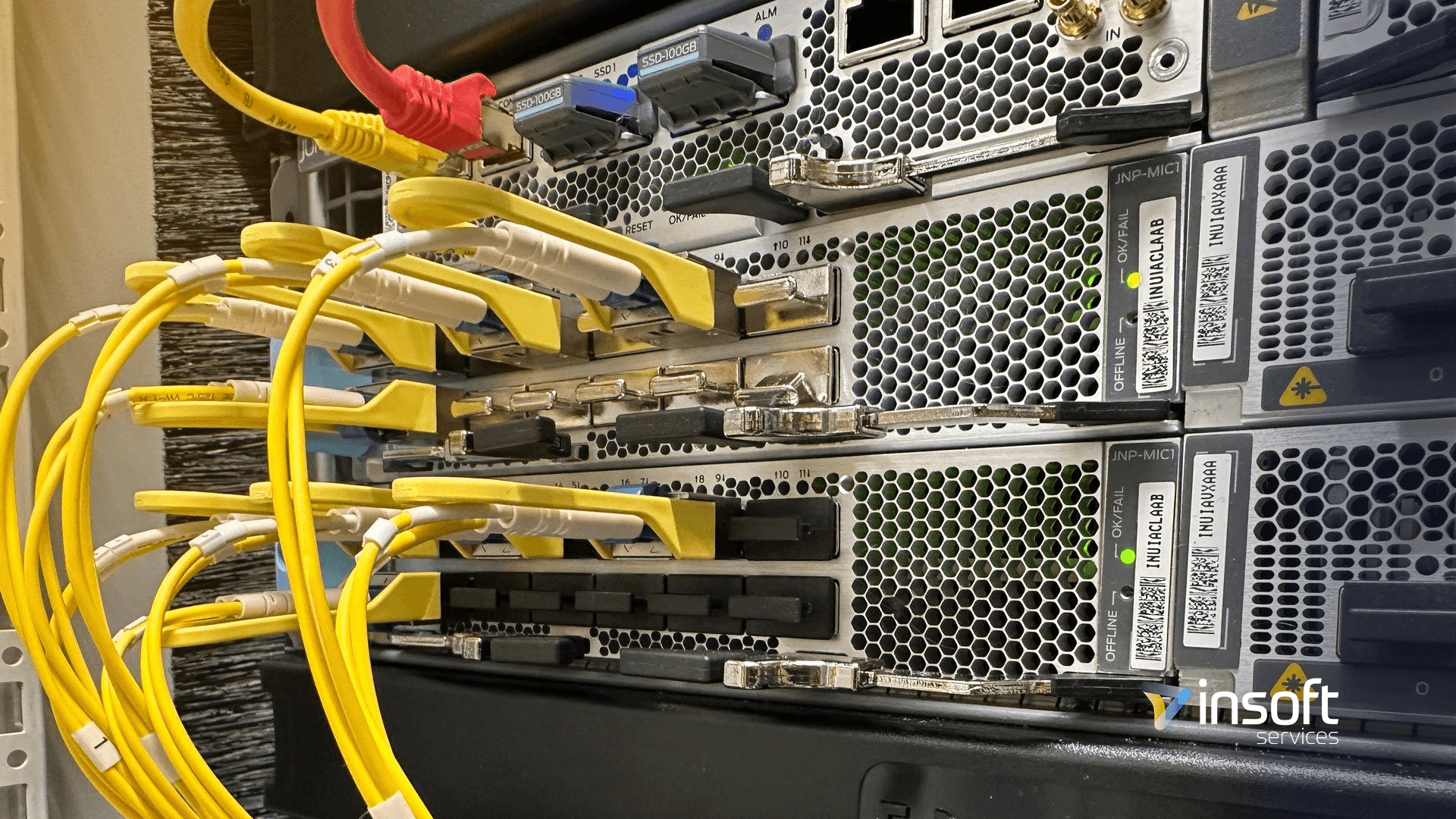
Even tiny delays in communication can leave expensive hardware waiting for data instead of performing useful work. To minimize latency, modern AI data centers rely on dense networks of high-speed fiber-optic cables that transmit information using light. These ultra-fast connections ensure that computing resources remain synchronized and fully utilized.
4. The Power Grid (The Ultimate Bottleneck)
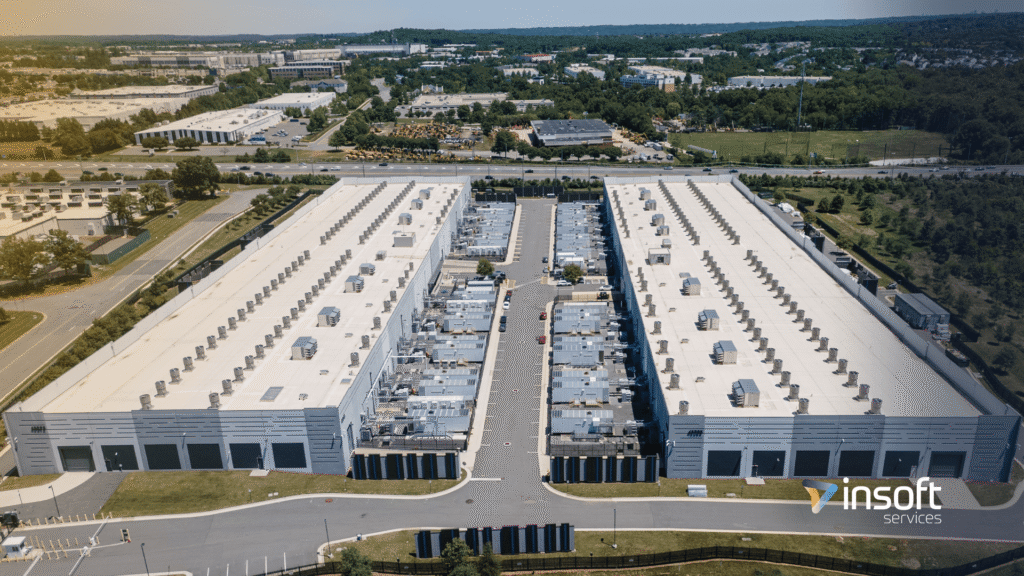
All of this brings us to the biggest challenge of all: finding enough raw electricity to keep the lights on. Data centers are consuming energy at a rate that is straining local power grids all over the world.
THE DATA CENTER ENERGY GAP
Legacy Rack: [==] 5-10 kW (Like a few kitchen appliances)
AI Rack: [=======================================] 40-150+ kW (Like an entire neighborhood)
Because utility companies often need several years to expand transmission capacity and upgrade local power grids, many technology companies are investing directly in their own energy solutions. These include on-site battery storage, dedicated substations, renewable energy projects, and, increasingly, partnerships that support next-generation nuclear energy to provide reliable, around-the-clock power.
The Bottom Line
Building the future of artificial intelligence is no longer just a software challenge—it is also an infrastructure challenge.
Supporting increasingly capable AI systems requires a new generation of data centers where high-performance processors, advanced cooling technologies, ultra-fast fiber networks, and resilient power systems operate as a single, integrated platform. As AI continues to evolve, the organizations that successfully balance these elements will be best positioned to power the next wave of innovation.


No Comments