
 Finland
 Germany
 Denmark
 Sweden
 Italy
 Netherlands
 Norway
















Reaching NSE 8 takes more than advanced coursework: candidates must hold NSE 4, NSE 5 or NSE 6 Secure Networking certification, and NSE 7 certification in the same track, then pass the NSE 8 Core Exam and one NSE 8 Elective exam. Fortinet Training for Technical Executives can help align learning with the technical capabilities and security priorities your organization needs.
That demanding path makes it essential to choose training for the role, not just the certification title. Executives need to understand which skills each level develops, which security domains matter to their teams, and which learning format fits operational commitments.
This guide explains Fortinet certification paths, including what NSE 8 requires, and reviews training topics across secure networking, SASE, cloud security, and security operations. You’ll also learn how instructor-led and self-paced courses differ, what online schedules are available, and how Fortinet-authorized training can support a practical development plan.
Fortinet NSE certification levels and career paths
Fortinet’s NSE certification program spans eight levels, from cybersecurity awareness to advanced network architecture and threat management. For executives, the practical task is to match a credential path to each team’s technical responsibilities and security priorities.
Certification Pathways and Prerequisites
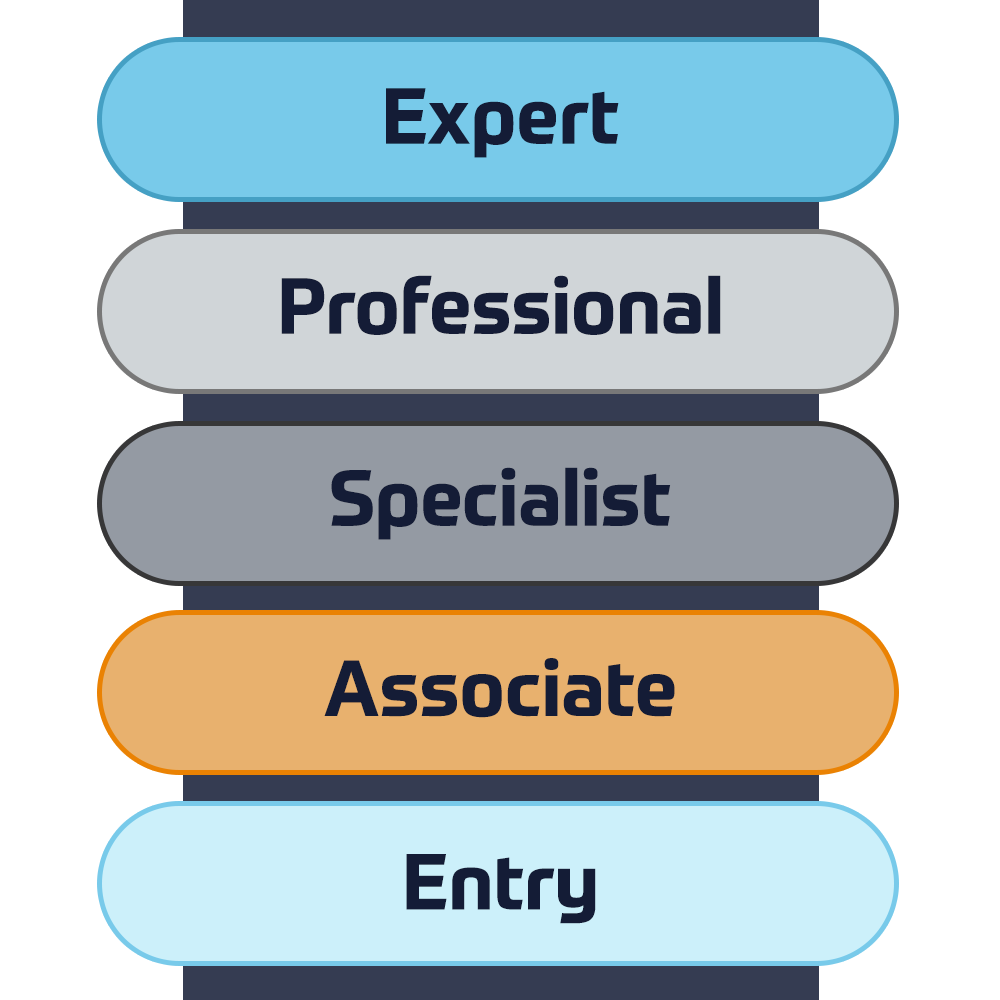
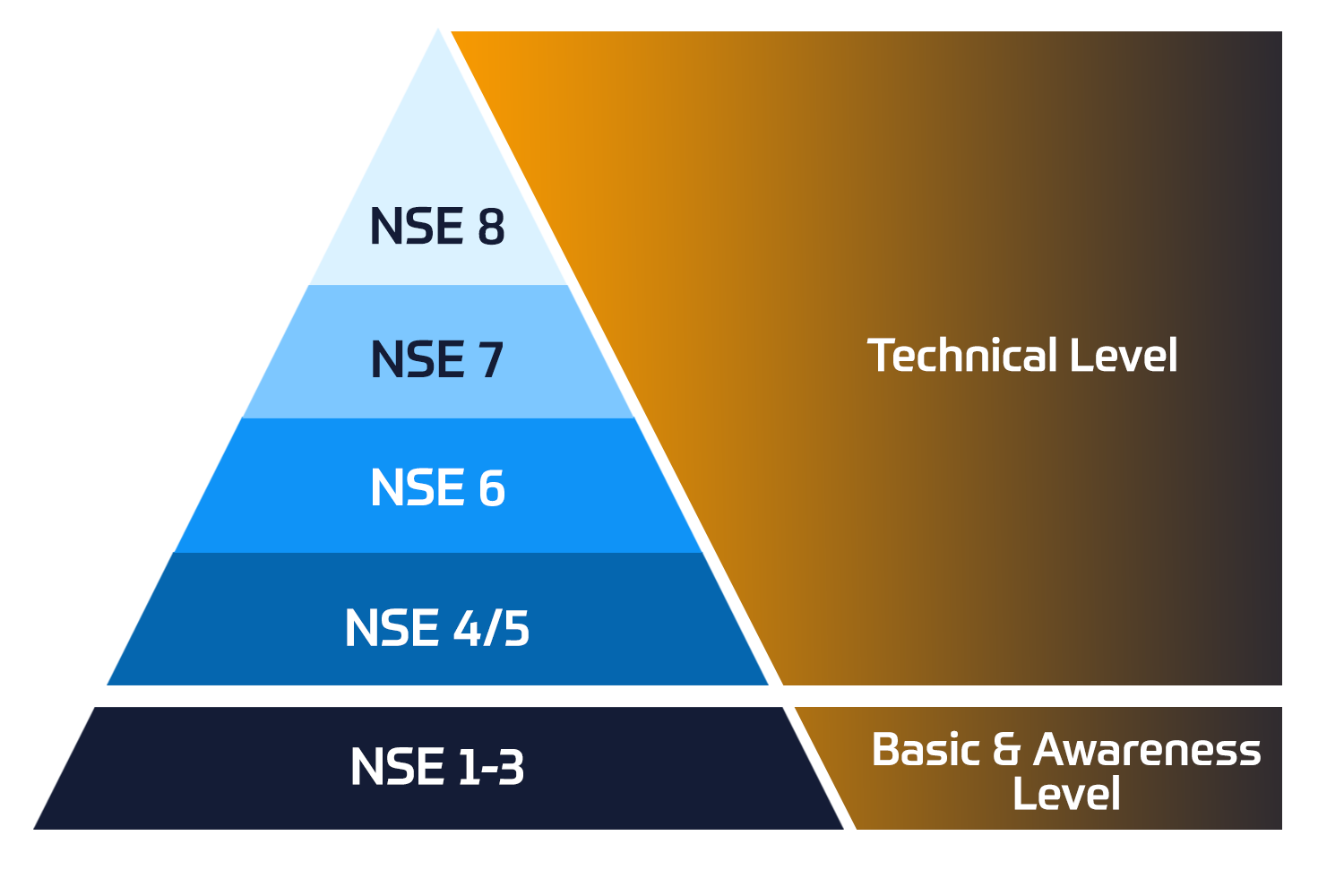
NSE 1 introduces cybersecurity concepts and the Fortinet Security Fabric; NSE 2 explores threats and Fortinet’s product portfolio. NSE 3 serves people working with Fortinet solutions in sales or technical roles. The technical path advances through NSE 4 FortiGate configuration, NSE 5 advanced tools such as FortiManager and FortiAnalyzer, and NSE 6 specialisations such as FortiMail or FortiWeb.
NSE 7 focuses on complex security architecture, while NSE 8 is intended for experts designing and managing enterprise networks. For a structured view of Fortinet certification paths, consider how each level aligns with your teams’ roles and operational scope.
Requirements and Proctored Exams
NSE 5 and NSE 6 require NSE 4 plus a relevant proctored exam. NSE 7 Secure Networking requires NSE 4, NSE 5 or NSE 6 Secure Networking, and its proctored exam. NSE 8 candidates need NSE 4, NSE 5 or NSE 6, and NSE 7 in the same track, then pass the Core Exam and one Elective exam.
NSE 4 requires its proctored exam; completing the FortiOS Administrator course is recommended. NSE 4-8 exams are proctored online or in person. Fortinet Training for Technical Executives can include certification preparation, but course completion and certification are distinct outcomes.
Fortinet learners can earn one ISC2 continuing professional education credit per training hour toward maintaining CISSP credentials. For OT security or MSSP operations, executives should align course selection with the team’s environment and responsibilities; an NSE credential alone shouldn’t be treated as proof of every specialised capability.
Exam scheduling is a separate step from course scheduling: FortiOS Administrator instructor-led online training is scheduled for November 30-December 3, 2026. A sound plan accounts for prerequisites, exam preparation, and whether the selected course supports the intended role. Fortinet’s authorized training information provides a starting point for reviewing available training.
Key considerations include prerequisite gaps, the separate exam requirement, and the difference between broad certification levels and specialised operational needs. Fortinet’s cybersecurity pathways can help structure development. Executives should map each credential to specific team responsibilities and the capabilities their security program requires.
Secure networking, SASE, cloud security, and security operations training
Fortinet-focused learning connects cybersecurity skills with the tools and architectures used across a network. Executives can shape training around secure networking, SASE, cloud security, or security operations, then connect those priorities to team responsibilities.
Fortinet training is more product-specific than general cybersecurity leadership training. It develops knowledge of Fortinet technologies and network security, while broader leadership programs typically address security strategy across platforms. A blended plan can pair technical depth with executive oversight, helping leaders understand architecture decisions and their operational implications.
For secure networking, FortiGate training develops practical understanding of firewall administration. Fortinet’s NSE 5 content includes FortiManager and FortiAnalyzer, tools that support centralized management and security analysis. Practical exercises help learners demonstrate network security concepts, rather than relying on theory alone. Executives can use these examples to identify where teams need stronger configuration and operational skills.
SASE and cloud security topics are most useful when connected to the organization’s architecture and risk priorities. Training plans can link these topics to access, network design, and security operations responsibilities. The goal is to build a shared technical vocabulary, so leaders can assess how design choices affect oversight, incident response, and day-to-day efficiency.
At advanced levels, NSE 7 prepares professionals to design and deploy complex security architectures. NSE 8 focuses on expertise in designing and managing complex enterprise networks. Those capabilities can inform leadership decisions about architecture, staffing, and technical development, while certification alone doesn’t guarantee lower risk or operational improvement.
To prioritize training, map each security objective to a role and an example task: firewall administration, centralized management, or architecture design. Align hands-on exercises with those tasks, then identify where leaders need strategic context instead of configuration practice. The Fortinet certification track can help connect role requirements with a technical learning pathway.
In a 2024 global cybersecurity skills-gap survey, 91% of leaders preferred to hire people with certifications; in that survey, 95% of decision-makers believed certifications positively impact their teams.
Instructor-led, self-paced, and customized training
Fortinet training combines instructor-led courses, self-paced study, and practical exercises. Each format serves a different priority: guided discussion, flexible scheduling, or applied work with network security concepts. For example, a firewall course can connect configuration decisions to operational responsibilities, while self-paced learning lets participants progress independently.
Instructor-led sessions suit teams that benefit from a shared schedule and direct engagement with an instructor. Fortinet public sessions run in person or virtually, bringing together Fortinet employees, business partners, and customers. This setting can help technical leaders discuss how a threat scenario relates to their organization’s security operations and procedures.
Self-paced courses let learners work through material around their work commitments. Practical exercises give participants an opportunity to demonstrate their understanding, rather than relying on course completion alone. For instance, an administrator-focused course can pair core concepts with firewall management exercises, connecting instruction to technical responsibilities.
A customized learning plan starts with a defined outcome. Identify the audience, the Fortinet technologies involved, and the capability gap, then select relevant course content and exercises. An executive group focused on security oversight may need architecture context, while network administrators may need applied configuration practice. This distinction keeps training aligned with each role.
Executives can enroll by selecting a course and submitting an enrollment request through its course page. To request a private session, provide the intended audience, learning objectives, relevant Fortinet topics, and preferred delivery format. Those details help shape a focused session around the group’s needs. The FortiOS Administrator course is one example of instructor-led, product-specific training.
Before choosing a format, consider the team’s experience, the operational demands of attendance, and whether practical work or discussion matters most. A blended plan can combine self-paced preparation with instructor-led analysis and hands-on exercises. This structure helps executives connect technical learning to workforce capability, security priorities, and the organization’s response to evolving threats.
Fortinet instructor-led online course schedule
Fortinet’s published instructor-led online schedule runs from November 2026 through March 2027. Course dates help teams plan training around operational commitments.
Course Duration
Scheduled courses span a single listed date or several calendar dates. FortiAnalyzer Analyst is scheduled for January 6, 2027, while FortiOS Administrator runs November 30-December 3, 2026. Use each course’s listed dates to plan attendance; the calendar span doesn’t establish daily teaching hours.
For technical executives, course length should fit the learning objective and team availability. A multi-date FortiOS Administrator session requires a different scheduling commitment from a single-date FortiAnalyzer Analyst session.
Online and In-Person Delivery
The schedule below covers instructor-led online courses. Fortinet public training sessions are also offered in person or virtually, extending delivery options beyond these online dates.
Online sessions can help distributed teams attend without travelling to a classroom. In-person delivery provides a classroom setting. For either format, align course dates with staff coverage and learning priorities, and protect time for focused participation.
Listed online sessions include:
- FortiOS Administrator: November 30-December 3, 2026
- FortiManager Administrator: December 14-15, 2026
- Enterprise Firewall Administrator: January 4-6, 2027
- FortiManager Administrator: January 5-6, 2027
- FortiAnalyzer Analyst: January 6, 2027
- FortiManager Administrator: January 25-26, 2027
- FortiOS Administrator and FortiClient EMS Administrator: February 1-4 and February 1-2, 2027
- FortiManager Administrator: February 2-3, 2027
- Network Security Support Engineer: February 3-5, 2027
- FortiManager Administrator: February 22-23, 2027
- FortiOS Administrator and SD-WAN Core Administrator: March 1-4 and March 1-2, 2027
- FortiAnalyzer Administrator: March 2, 2027
Several courses overlap, including FortiOS Administrator and FortiClient EMS Administrator in February. Compare the relevant dates with team responsibilities, then choose the course that supports the intended technical capability. A clear schedule helps executives coordinate attendance while maintaining operational coverage.
Insoft Services
Insoft Services provides Fortinet authorised training as a Premier Authorised Training Center (ATC) of Fortinet. Turn to the team when technical leaders need training aligned with Fortinet certification pathways, network security responsibilities, or organizational learning objectives. As a Fortinet Professional Services Partner worldwide, Insoft Services also brings professional-services context to discussions about technical capability and security priorities.
To identify a suitable training direction, outline the roles involved, the Fortinet technologies your teams use, and the capabilities you want to develop. These details help focus the discussion on relevant training and the next step in your team’s development. Insoft Services provides services, including training, rather than Fortinet firewall products.
Please contact Insoft Services to discuss your Fortinet training requirements.
Turn technical priorities into lasting capability
Make the next step a capability plan that connects security priorities with the people responsible for delivering them. Define which roles need deeper Fortinet expertise, which operational decisions they support, and how learning can strengthen your organization’s long-term security posture. A focused plan keeps technical development relevant as architectures and responsibilities evolve.
Insoft Services provides Fortinet authorised training as a Premier Authorised Training Center (ATC) of Fortinet, delivering specialized programs designed for modern enterprises. This focused approach helps organizations develop deep technical expertise while keeping learning aligned with specific security goals and operational requirements.
Discuss your team’s priorities and training objectives with Insoft Services. A considered investment in Fortinet Training for Technical Executives can help establish a stronger foundation for informed security leadership and future readiness.
Frequently Asked Questions
What Does It Really Take to Become NSE 8?
NSE 8 requires relevant prior certifications and success in two exams: the Core Exam and one Elective exam. Candidates must hold NSE 4, NSE 5 or NSE 6, and NSE 7 certification in the same track. Fortinet recommends extensive production-environment experience with its products. For an executive planning team development, treat NSE 8 as an advanced specialist path, not a general leadership credential.
What Fortinet training courses are designed for technical executives?
Fortinet courses address technical subject areas rather than an executive title. Executives can select training that matches their oversight needs, such as FortiOS administration for firewall operations, FortiManager for centralized management, or FortiAnalyzer for analysis. A practical approach is to pair a leader’s architecture or governance responsibilities with relevant technical learning, while directing hands-on administration training to staff who configure those systems.
What topics do Fortinet executive training programs cover?
Relevant topics include secure networking, firewall administration, security management and analysis, cloud security, SASE, and security operations. The right mix depends on the organization’s architecture and the decisions leaders must oversee. For example, a team strengthening centralized policy management may focus on FortiManager, while leaders overseeing security analysis may prioritize FortiAnalyzer concepts and workflows.
What are the prerequisites and technical level for Fortinet executive training?
Prerequisites depend on the course or certification target. Introductory cybersecurity learning can suit leaders who need shared terminology, while advanced technical study assumes progressively deeper Fortinet knowledge. For example, NSE 5 and NSE 6 require NSE 4 certification. Executives should distinguish courses intended to build strategic understanding from certification preparation that requires prior credentials and technical exam readiness.

No Comments