
 Finland
 Germany
 Denmark
 Sweden
 Italy
Italy Netherlands
 Norway
















Majority of networking roles now mandate specific credentials, can your organization afford the operational risk of a remote engineering team with unverified technical standards? You likely recognize the inherent challenge of verifying technical competence when your engineers are distributed across the globe. The cost of a single configuration error in critical infrastructure is simply too high to leave skill levels to chance. It’s essential to have a reliable benchmark that ensures every team member operates with the same high degree of precision and strategic depth.
This article outlines a sophisticated professional development framework built on official Cisco training and cisco certifications to help you establish operational trust and technical excellence. By utilizing standardized cisco courses and cisco training programs, you can create a clear path for new hires that reduces onboarding errors and minimizes network downtime. We’ll examine how the transition to the Cisco 360 Partner Program in February 2026 and the new emphasis on AI-driven networking provide the tools your team needs to remain agile. You’ll learn how to transform your distributed workforce into a cohesive unit of experts ready to manage the complexities of modern, hybrid environments with absolute confidence.
The Necessity of Standardised Cisco Training for Remote Engineering Teams
Official cisco training serves as the definitive industry benchmark for network reliability and technical competency. In a distributed work environment, where direct supervision is limited, relying on unverified claims of expertise introduces unnecessary risk. Standardised cisco training programs provide a rigorous framework that ensures every engineer, regardless of their physical location, adheres to the same high standards of operational excellence. According to data from spoto.net in April 2026, 75% of networking roles now require or prefer these credentials, reflecting a global consensus on their necessity for maintaining infrastructure integrity.
Establishing Technical Trust in a Distributed Environment
Subjective CV reviews are often insufficient for validating the true proficiency of remote network engineers. Official vendor-authorised validation remains vital in high-stakes environments where precision is non-negotiable. By following established Cisco certification track, professionals prove they meet a global standard of excellence. Cisco certifications act as a global passport for technical expertise, providing a clear signal of competence to remote managers and bridging the visibility gap in distributed teams.
The Economic Impact of Certified Remote Staff
The economic benefits of employing certified remote staff are significant. Hiring “day-one ready” engineers minimizes the hidden costs associated with extensive on-the-job training and mentorship. Official cisco courses integrate hands-on labs that mirror real-world scenarios, ensuring theoretical knowledge becomes practical skill. This creates a common technical language that reduces troubleshooting time across different time zones. While certified professionals earn more than their non-certified peers, the reduction in configuration errors and downtime provides a high return on investment. You’ve the opportunity to review the official cisco certifications track to plan your team’s strategic growth.
Mapping the Cisco Certifications Track: From Associate to Expert
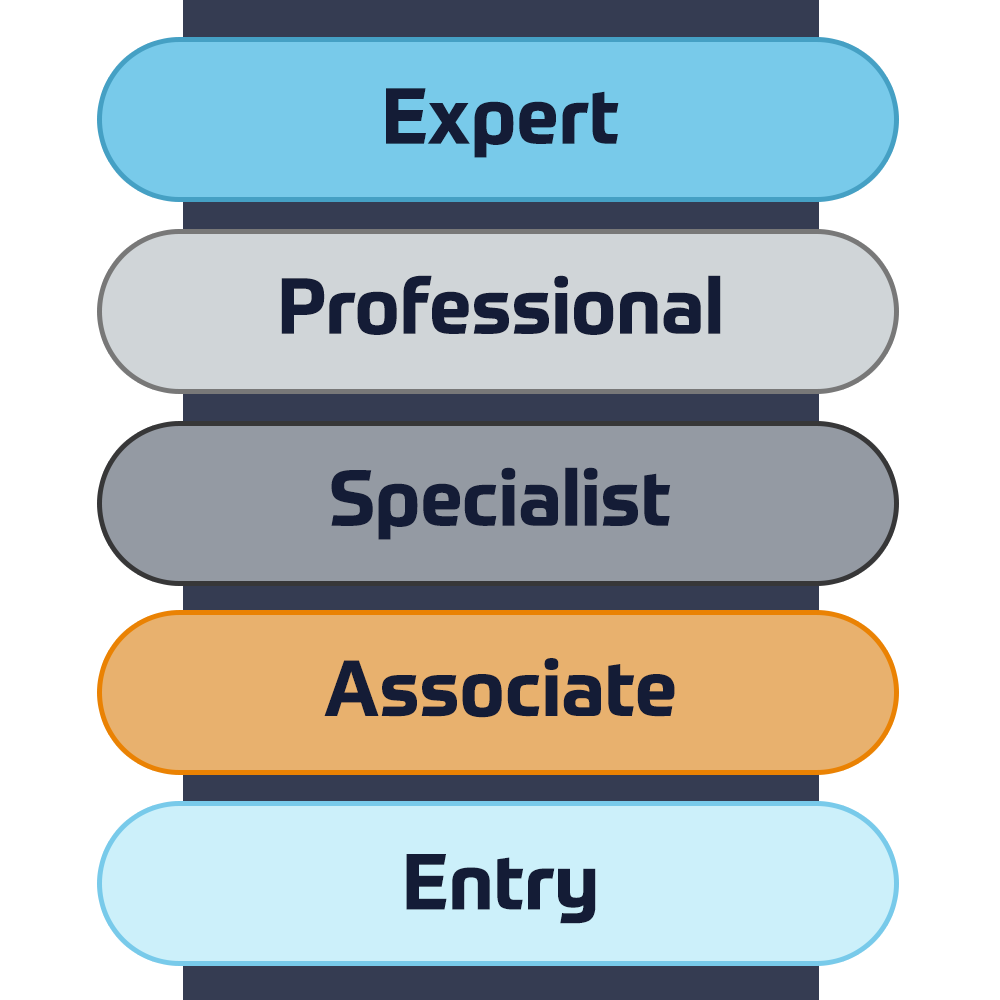
The Cisco certifications track functions as a sophisticated professional development hierarchy, providing a logical progression from foundational networking to expert-level orchestration. This structured approach allows organisations to map individual growth to specific business objectives, ensuring that remote engineers possess the exact competencies required for your unique infrastructure. By leveraging a variety of cisco courses, managers can build a team that is both versatile and highly specialized. We recommend aligning your training strategy with the latest industry shifts to maintain a competitive edge in distributed network management.
Associate Level: Ensuring a Uniform Baseline with CCNA
The CCNA: Implementing and Administering Cisco Solutions is a non-negotiable requirement for remote engineers because it establishes a uniform baseline of technical knowledge. It covers vital areas such as IP connectivity, security fundamentals, and automation basics, which are critical for maintaining distributed networks. As of early 2026, automation skills are expected to be required in 60% of all networking roles, making this foundational cisco training more relevant than ever. This certification ensures that every team member speaks the same technical language from their first day on the job.
Professional and Specialist Levels: Aligning Skills with Infrastructure
Advancing to the CCNP level allows engineers to specialize in Enterprise, Security, or Service Provider tracks to match your specific organisational needs. For those focusing on defense, NICCS-listed Cisco training provides government-recognized validation of cybersecurity proficiency. Following the February 2026 certification overhaul, the rebranding of DevNet to Automation certifications highlights the industry’s shift toward programmable infrastructure. While a generalist provides broad support, a specialist possesses the deep, granular knowledge necessary to solve complex architectural challenges. To ensure your team remains at the forefront of these advancements, you might explore our tailored cisco training programs to identify the best fit for your current projects. Utilizing cisco certifications in this way ensures your remote staff are not just technically proficient but strategically aligned with your long-term goals.
The Onboarding Checklist for a Remote Network Engineer
Successful onboarding for a remote engineer requires more than just a hardware shipment; it’s a structured process designed to validate technical maturity and ensure operational consistency. With nearly 80% of employees in eligible roles working in a hybrid or fully remote capacity as of 2025, the need for a standardized integration plan has never been more critical. By following a rigorous checklist, you can eliminate the “visibility gap” and ensure your new hires are prepared to manage complex infrastructure with the precision your organization demands.
- Step 1: Technical Audit. Begin by assessing the new hire’s existing cisco certifications against your specific team requirements. It’s essential to verify their proficiency with the exact IOS versions and hardware architectures currently deployed in your environment.
- Step 2: Gap Analysis. Identify specific Cisco training programs needed to bridge skill deficits. This might include transitioning from legacy routing to software-defined networking or mastering cloud security protocols.
- Step 3: Access and Tooling. Provisioning is a vital step. Ensure your remote staff has immediate access to official digital learning resources and remote lab environments. This allows them to practice configurations in a safe, sandboxed setting before touching production networks.
- Step 4: Continuous Certification. Don’t let skills stagnate. Establish a 12-month roadmap for advanced cisco courses and recertification. This ensures your team stays current with updates, such as the CCNP Enterprise version 2.0 update that became available in April 2026.
Phase One: Immediate Technical Alignment
Verifying familiarity with your local software and hardware versions is paramount during the first week. We recommend implementing a “shadowing” period where remote engineers use Cisco collaboration tools to observe your team’s specific troubleshooting workflows. This real-time exposure helps them understand your internal protocols and reduces the likelihood of configuration errors during their initial solo tasks.
Phase Two: Long-Term Professional Development
Integrating Cisco Digital Learning into the weekly workflow fosters a culture of continuous improvement. You’ll find it beneficial to set measurable KPIs based on certification milestones and successful network optimizations. This approach ensures that your cisco training investment translates into tangible infrastructure reliability. If you’re ready to standardize your team’s expertise, we invite you to explore our comprehensive Cisco certification tracks to find the ideal path for your engineers.
Optimising Training Budgets with a Cisco Learning Partner
Partnering with an authorized Cisco Learning Partner represents a strategic investment in the long-term reliability of your critical infrastructure. It’s a decision to prioritize operational stability and technical excellence over the risks associated with unverified study materials. As an established Cisco Learning Partner, Insoft Services bridges the gap between theoretical knowledge and practical application by providing professional consultancy alongside our official cisco training programs. This consultative approach ensures that your cisco certifications strategy aligns perfectly with your organization’s specific technical requirements and future readiness goals. Our global delivery model guarantees that your remote staff receive the same high standard of instruction regardless of their physical location.
Why Authorised Training Exceeds Self-Study
Authorised training provides access to official Cisco labs and the most current curriculum updates that self-study resources often lack. For instance, the CCNP Enterprise version 2.0 update released in April 2026 requires precise lab environments that only an authorized partner can provide for hands-on practice. You gain insights from seasoned instructors who manage complex infrastructures daily, offering practical troubleshooting techniques that go beyond standard textbooks. This expert guidance is essential for remote engineers who must maintain technical excellence without immediate physical supervision. By learning in a sandboxed, official environment, your team can master cisco courses without risking the integrity of your production systems.
Maximising Value through Cisco Learning Credits
Strategic management of Cisco Learning Credits (CLCs) allows you to fund team-wide upskilling with greater budget efficiency. These credits simplify the procurement process for international IT departments by acting as a universal training currency that eliminates the complexities of multi-currency transactions across different regions. You can redeem CLCs for individual cisco training sessions or comprehensive certification tracks for your entire distributed team. This streamlined method ensures your training budget is utilized effectively while maintaining high standards of technical proficiency. We encourage you to explore our full vendor training catalogue to see how we support multi-platform environments across the globe.
Securing the Future of Your Distributed Network Infrastructure
Establishing a standardized benchmark for technical proficiency is the most effective method to mitigate operational risks within remote engineering teams. By aligning your workforce with official cisco training programs, you ensure that every configuration and troubleshooting task adheres to a global standard of excellence. This strategic approach doesn’t just reduce the likelihood of costly infrastructure errors; it also prepares your team for the significant industry shifts scheduled for February 2026, including the transition to AI-driven networking and automated orchestration tracks.
As an Authorised Cisco Learning Partner with a global presence across the EMEA region, Insoft Services provides the specialized expertise in IoT and SDN required to optimize your complex network environments. We offer professional consultancy alongside our curriculum to help you maximize the value of your training budget through efficient credit management and tailored learning paths. We’re dedicated to helping you transform your distributed workforce into a high-performing unit that maintains technical excellence across borders. We look forward to supporting your organization’s journey toward technical mastery and long-term agility.
Empower your remote team with Official Cisco Training from Insoft Services

No Comments